Interviews
2026
Interviews with Ayça Tekin-Koru, Erdem Başçı and Canan Derinöz Gencel, originally published in the February, Q2 and Q3 2026 sustainability bulletins.
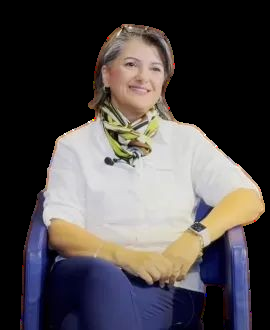
Ayça Tekin-Koru
Professor of Economics · Co-Director of TEDUsTRC · Dean of TEDU Graduate School
What is the purpose/vision of TEDUsTRC?
TEDUsTRC aims to contribute to a deeper, evidence-based understanding of the Turkish economy within the context of global trade and sustainability transformations. While international academic and policy debates are important reference points for our work, our primary policy audience is Türkiye. We see it as essential to analyze global sustainability agendas, trade regimes, and regulatory changes through the lens of Türkiye’s economic structure, institutional capacity, and development priorities.
Our vision is to produce rigorous research that speaks directly to Türkiye’s policy challenges, such as green transformation, competitiveness, and inclusive growth, by grounding global frameworks in local realities. Rather than importing ready-made solutions, we focus on understanding how international economic and sustainability policies interact with Türkiye’s production structure and trade integration.
Equally central to this vision is education. sTRC was designed not only as a research and policy-oriented center, but also as a space for training students. By working closely with undergraduate and graduate students on applied research and policy projects, we aim to cultivate analysts who understand Türkiye’s economy deeply and can engage confidently with both domestic and international policy debates.
What is the story of TEDUsTRC?
TEDU sTRC was originally established in 2015 as the TEDU Trade Research Center (TRC), the first research center of TED University. However, the intellectual seeds of the center were planted earlier, in 2013, during a joint research project at the Turkish Statistical Institute (TÜİK) that I conducted together with Prof. Dr. Nazire Nergiz Dinçer. It was through that collaboration that we first realized how complementary our academic strengths were.
While I brought a stronger micro-level perspective, Prof. Dr. Dinçer contributed deep macroeconomic insight, and we shared a solid background in applied econometrics. This combination proved to be particularly productive for policy-relevant research and highlighted the need for an institutional space where such complementary expertise could be brought together to study Türkiye’s economy in relation to global trade dynamics.
Building on this realization, we founded the center with great enthusiasm and a strong sense of shared ownership. Over time, as sustainability issues became increasingly embedded in global trade and development debates (and as our own research agendas expanded accordingly) the center formally incorporated sustainability into its name two years ago. This reflected a natural evolution rather than a strategic rebranding.
From the outset, sTRC has been jointly managed by the two of us - its two founders - with formal roles alternating over time but collaborative leadership remaining constant. The journey has not been easy. The center has grown under significant resource constraints, requiring persistence and collective effort. Yet this process has also shaped sTRC’s identity as a resilient, research-driven academic environment.
Beyond research outputs, sTRC has gradually evolved into a learning space where students find room not only to acquire technical skills, but also to explore their academic interests and develop a sense of professional identity. Through close mentoring and active involvement in research and policy-oriented projects, students are exposed early on to real analytical questions and institutional realities. Many come to see the center as a place where learning is experiential and where they begin to understand where they stand as researchers, analysts, or policy-oriented economists. This student dimension has become an integral part of sTRC’s intellectual life and one of its most distinctive features.
In your opinion, what should be Türkiye's role in this global sustainability transformation? How do you locate Türkiye in sustainability efforts?
Türkiye occupies a critical position in the global sustainability transformation, shaped by its level of development, production structure, and deep integration into international trade networks. In the current geopolitical and geoeconomic environment (marked by supply chain reconfiguration, climate-related trade measures, and strategic industrial policies) Türkiye is not only responding to external pressures but also operating within a narrow window of opportunity to shape outcomes.
While adaptation and translation of global sustainability frameworks remain important, we do not see Türkiye solely in a reactive role. Under the right policy choices, Türkiye has the potential to play an agenda-shaping role, particularly in aligning green transformation with industrial competitiveness and regional trade integration. Missing this window would mean locking in higher adjustment costs in the future, both economically and socially.
A critical dimension of this opportunity lies in human capital. The green transition ultimately depends on whether countries can align skills development and workforce planning with structural economic change. At sTRC, we address this dimension by integrating students directly into research on green transformation, labor planning, and trade-related sustainability challenges. In doing so, we contribute not only to policy-relevant analysis, but also to the training of a new generation of economists who understand Türkiye’s green transition as a combined economic, social, and policy process.
What specific role does sTRC play in guiding Turkish policymakers and the private sector?
sTRC plays a facilitating and analytical role in helping Turkish policymakers and the private sector navigate the economic implications of global trade and sustainability transformations. Rather than offering prescriptive solutions, we focus on producing evidence-based analysis.
For policymakers, this involves translating global sustainability agendas, trade regulations, and climate-related policy frameworks into analytically grounded insights that are relevant for domestic decision-making. Our work emphasizes how international developments interact with Türkiye’s production structure, trade integration, and development priorities, supporting more informed and realistic policy design.
For the private sector, sTRC provides an analytical bridge between evolving global standards and firm-level realities. We help firms understand not only compliance costs, but also strategic implications and adjustment pathways.
This role is grounded in direct experience. Over the years, we have been involved in a wide range of projects with public institutions, international organizations, and private firms, often working closely with all three simultaneously. These projects have allowed us to engage with policy design and implementation on the ground, confront practical constraints firsthand, and test analytical insights against real-world decision-making processes. As a result, sTRC operates both within academia and in direct interaction with the field, maintaining a continuous dialogue between research and practice.
Which specific problems or topics does sTRC prioritize in its research and policy recommendations?
At sTRC, we prioritize policy-relevant research areas where Türkiye is currently facing binding constraints in its green and trade-related transformation. A central focus of our recent work has been climate change-related economic policies, including the implications of the EU Carbon Border Adjustment Mechanism (CBAM), emissions trading systems (ETS), and sustainability-linked trade regulations for Türkiye’s production structure and competitiveness.
In this context, we have contributed directly to national policy processes, including expert input to the Specialization Commissions of Türkiye’s 12th Development Plan. Our research and policy notes in these areas aim to clarify economic trade-offs, distributional impacts, and implementation challenges associated with climate and trade policies.
A second priority area is corporate sustainability reporting and institutional capacity building. TEDU and sTRC in particular was among the first six institutions accredited by the Public Oversight Accounting and Auditing Standards Authority (KGK) to design and deliver training programs on corporate sustainability reporting. Through these programs, as well as our ongoing research and teaching activities, we contribute to building analytical and institutional capacity around sustainability disclosure, compliance, and data use in Türkiye.
Building on this capacity-building work, sTRC is currently developing a comprehensive sustainability reporting inventory for Türkiye. This effort is based on a large-scale, collective research process involving more than ten students working closely with us. The dataset has been constructed entirely from scratch and traces firm-level sustainability disclosures back to 2016, allowing for consistent longitudinal analysis.
These data form the basis of many undergraduate and graduate theses, our own academic research, and policy-oriented outputs, creating an integrated research-education-policy pipeline. In the next stage, these datasets will be made available for public use. We see the creation of reliable sustainability data as a public good and a necessary foundation for evidence-based climate and sustainability policymaking in Türkiye.
How does sTRC envision its partnership with international organizations, the private sector, and other academic institutions?
sTRC approaches partnerships as long-term intellectual collaboration rather than ad hoc project-based engagement. A defining example of this approach is our collaboration with the European University Institute and the World Trade Institute, which began in 2014. Since then, we have co-organized the Empirical Investigations in Services Trade conference every two years, bringing together leading scholars and policymakers to advance empirical research in services trade.
At the international policy level, we have worked on projects with institutions such as the World Bank, the International Monetary Fund, and the World Trade Organization, contributing analytical input on trade, sustainability, and development-related issues. These collaborations allow us to position Türkiye not merely as a case country, but as an economy whose experience can inform broader policy debates.
At the national level, institutional partnerships are equally central to our work. Our formal protocols with the Turkish Statistical Institute and the Public Oversight Accounting and Auditing Standards Authority underpin both our research and capacity-building activities, particularly in areas related to data production, sustainability reporting, and policy design.
Looking ahead, we aim to deepen these partnerships by focusing on co-production of knowledge, expanding comparative research, and strengthening institutional capacity in Türkiye. Our goal is to remain firmly embedded in international research networks while continuing to build durable, practice-oriented collaborations that connect academia, policy institutions, and the private sector.
What is your ultimate hope for the impact of sTRC in the next 5 years?
Our ultimate hope is that sTRC becomes a trusted reference point for evidence-based analysis on trade, sustainability, and climate-related economic policy in Türkiye. In five years, we aim for our research and policy outputs to be routinely consulted in national policy discussions. Equally important is institutional impact. We want the data infrastructures, analytical tools, and policy frameworks developed at sTRC to outlive individual projects and contribute to Türkiye’s long-term capacity for sustainability policymaking. Making high-quality data publicly available and strengthening institutional learning processes are central to this objective.
Finally, we see human capital as a lasting legacy. By integrating our students into research and policy work, we aim to train analysts who are comfortable operating at the intersection of academia and policy. If sTRC can help shape a generation that approaches Türkiye’s green and trade-related transformation with analytical depth, realism, and responsibility, that would be our most meaningful impact.
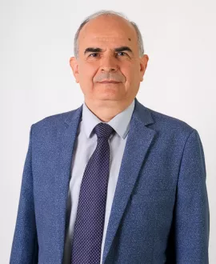
Erdem Başçı
Professor of Economics at TED University · Former Governor of the Central Bank of the Republic of Türkiye · Former Ambassador and Permanent Representative of Türkiye to the OECD
How do you evaluate the steps taken by leading central banks (the ECB, the Fed, etc.) to integrate climate change-related risks into their macroeconomic analyses and monetary policies?
Today, climate change risks are being evaluated by an important organization called the Network for the Greening of the Financial System (NGFS). This organization is a voluntary international group with 149 members, formed by central banks and banking supervisory authorities. The Federal Reserve, the central bank of the United States, recently decided to withdraw from this organization. Despite this, the organization continues to work intensively on the possible effects of climate change-related risks on the financial sector and the broader economy, as well as on possible policy measures. I would recommend the NGFS website to our readers who are interested in this topic.
Do you think central banks will add sustainability as an objective in the coming period? Have there been any steps taken in this regard?
The European Central Bank (ECB) has to prioritize the issue of price stability, as written in its founding law. We call this its legal mandate. At the same time, the law also grants it duties and powers regarding financial stability. Although the climate issue is not explicitly written in the law, steps can still be taken in Europe by evaluating this matter within the scope of financial stability. Many other central banks approach the climate issue in a similar way. Here, the Federal Reserve (Fed) stands out as an exception, as it takes a more distant view of this issue.
What are the possible macroeconomic effects of the Carbon Border Adjustment Mechanism (CBAM) on Türkiye’s exports and current account balance? How should central banks manage such transition-period shocks?
The Carbon Border Adjustment Mechanism is a European Union practice that concerns our country closely. The idea behind it is that Europe’s own producers and foreign producers exporting goods to Europe should be subject to equal treatment in terms of carbon emissions. If these foreign companies have already paid a price for carbon emissions in their own countries at a level similar to the EU, they will be able to continue exporting as before without paying any additional tax. If they have paid a lower price in their own countries, then a payment similar to a customs tariff will be made at the EU border equal to the difference.
This issue concerns not so much our Central Bank as it does our Ministry of Trade, Ministry of Environment and Urbanization, and Ministry of Energy. Its impact will initially be on six sectors. These are sectors with high carbon emissions. In terms of our country’s exports, the iron and steel, aluminium, and cement sectors stand out more prominently. Although its effect on the current account deficit is limited at this stage, it is a regulation that will have especially important consequences for our iron producers. Under our newly enacted Climate Law, establishing the carbon market that is currently being set up in our country constitutes the most important measure we can take on this issue.
Is ‘greening’ central banks’ balance sheets according to sustainability criteria, for example, giving priority to green assets in collateral, an effective tool for accelerating market transformation?
Pioneering steps in this matter are being taken by the European Central Bank (ECB). The important difference between Europe and us here is that the ECB, even if only to a limited extent, can also purchase private sector bonds through open market operations. Similarly, it is possible for the ECB to prioritize green bonds among the securities it accepts as collateral. Our Central Bank Law is written in a more conservative way in this regard. At this stage, it would be more appropriate for our country to prioritize price stability. For this reason, the conservative approach followed in this matter seems more suitable.
What kind of role should the Central Bank of the Republic of Türkiye (CBRT) undertake in balancing the effects of the green transition on growth and inflation and in supporting sustainable finance?
As far as I can see, our Central Bank is closely monitoring global and regional developments in this field. Together with our banking supervision and regulation authority, the BRSA (BDDK), they are examining global best practices and making the necessary preparations. Of course, it is possible for them to carry out these preparations within the framework of the provisions related to financial stability, which are also included in our CBRT Law.
How can the tendency of firms toward greenwashing be reduced in the fight against the climate crisis? What is the latest point reached in the work on the Task Force on Climate-Related Financial Disclosures (TCFD), which began with the efforts of G20 central banks at the global level?
Your question here is about pretending as if. How can it be ensured that firms make sincere efforts on this issue? The answer to this question was provided, following the TCFD’s final report, through the IFRS S1 and IFRS S2 reporting standards published globally under the umbrella of the International Financial Reporting Standards Foundation. The first of these addresses the matter in a more general way within the framework of the Sustainable Development Goals, while the second addresses it more specifically within the framework of climate risks. How developments in these areas will be reflected as financial risks and opportunities for firms should again be determined and disclosed by the firms themselves. This disclosure should be made at least once a year, within a certain standard framework, and simultaneously with other financial statements and reports.
Our regulatory institution in this field, the Public Oversight Authority (KGK), has brought these two standards into our country. The Türkiye Sustainability Reporting Standards (TSRS 1 and TSRS 2) were made mandatory primarily for our large-scale companies. This very important step makes it necessary for the issue of sustainability to be addressed seriously not merely by the communication units of companies, but at the highest level by the companies’ management and supervisory bodies, and to be reported transparently to investors.
In this way, investors will be able to provide abundant and inexpensive financing to firms that are genuinely making an effort in the green transition. Firms that merely act as if they are making an effort, on the other hand, will be able to be easily identified through the reports they themselves have written thanks to these standards. Therefore, access to financing for such firms will become more difficult.
This is why Financial Reporting Standards are important. Since writing and auditing reports within the framework of the new-generation TSRS 1, and especially TSRS 2, requires special competencies, our Public Oversight Authority continues to take important steps regarding the training of experts and auditors in this field. I would recommend that our readers who are interested in this issue closely follow the ‘Sustainability’ section on the KGK website.
I would also especially like to thank you for your excellent questions.
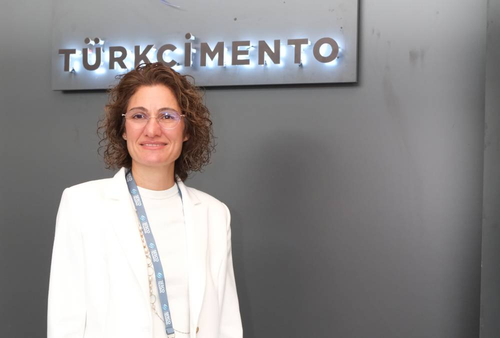
Canan Derinöz Gencel
Director of Environment and Climate Change Department at TÜRKÇİMENTO (Turkish Cement Manufacturers’ Association)
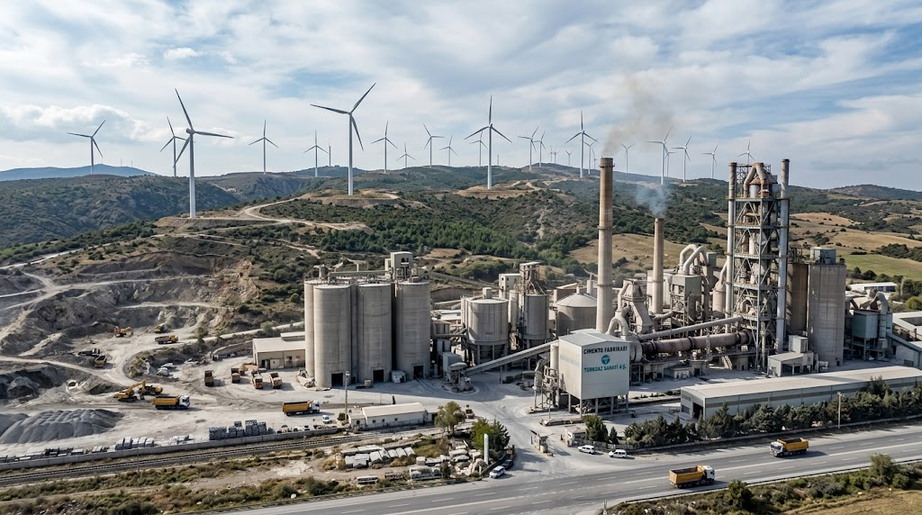
Creating sound datasets for corporate sustainability disclosures can be quite complex, particularly when tracking Scope 1, Scope 2 and Scope 3 emissions under standards such as TSRS and GRI. What are the main challenges facing the Turkish cement sector in terms of data transparency? How do you assess the reliability of the current metrics presented to investors?
We closely follow the reports of our sector. Frankly, I feel quite confident about the reliability of the data. This is because our sector’s data, particularly Scope 1 greenhouse gas emissions, are subject to continuous monitoring, reporting and verification systems. These reports are therefore prepared regularly and submitted to the Ministry. Before submission, they are also approved by verifiers. As a result, the reports contain data that have been approved and verified.
Scope 2 emissions are energy-related emissions. The relevant coefficients are published by the Ministry of Energy. Energy consumption figures are also based on invoiced records. Therefore, I consider the data in both of these areas to be highly reliable.
Our Scope 3 emissions are also relatively low in our sector. The sector also has a strong command of the logistics side. For this reason, I believe we are in a very reliable position in terms of the data presented in sector reports.
With today’s decarbonisation pressures and the integration of new technologies such as artificial intelligence and automation into energy management, are we witnessing a fundamental restructuring of cement production?
There has not been such a fundamental or large-scale restructuring. Particularly in our country, this has been a gradual process. Environmental limit values in Türkiye have been revised within the framework of alignment with the EU acquis. They have been updated over the past 20-25 years, and each new piece of legislation has brought another step of improvement. At the same time, older technologies have also been phased out.
For example, wet kilns were used in the past; their energy consumption was very high and their efficiency was lower. Today, there is not a single wet kiln left in Türkiye; they have all been replaced by new and modern kilns. The limit values for dust emissions have also been aligned with European Union regulations for a very long time. Dust treatment equipment was replaced in order to comply with these limits. On the carbon side, we are already subject to international regulations.
Therefore, in the sector we represent, there has not been a situation where ‘a revolution happened, everything suddenly changed and everything was rebuilt from scratch.’ The state where our sector is today is the result of a gradual improvement process extending over 20-30 years.
How effectively can the Turkish cement sector utilize industrial and household waste as alternative fuels or raw materials? What are the legislative or infrastructure bottlenecks preventing us from reaching European averages? Is TÜRKÇİMENTO conducting any work in this area?
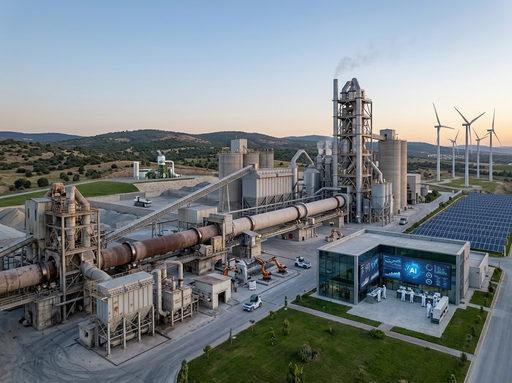
The circular economy has particular importance for our sector. Cement kilns can use by-products or waste from other industries either as an energy source or as an alternative raw material. For example, waste containing calcium or magnesium, such as marble fragments or lime waste, can be used as alternative raw materials. Waste containing energy can be used as fuel.
These last figures are due to be released soon: In 2025, our sector used 2.3 million tonnes of waste in production by making use of its energy content. This corresponds to a 14% substitution rate in terms of thermal; in other words, 14% of the sector's thermal energy demand is met by waste-derived alternative fuels.
There is also approximately 7.7 million tonnes of alternative raw material use. This corresponds to around 6% of the total. These materials may include by-products from other industries, such as slag from the iron and steel sector, ashes or other forms of waste. The basic condition is that the waste must contain materials that are also present in the raw materials used for cement production, and it must be non-hazardous. The circular economy therefore has particular importance for our sector and also makes a useful contribution to the country’s waste management.
That said, our figures are still considerably below those of the European Union. In Europe, alternative fuel use can reach levels of around 50%. In Türkiye, however, the system for converting waste into fuel is not sufficiently developed. Abroad, there are facilities that collect this waste, process it and place it on the market as fuel. We do not have a sufficient number of such facilities.
Another issue concerns the import of alternative fuels and raw materials. In Europe, these materials can be traded between countries. In Türkiye, however, there are restrictions on their import. Without imports, the sector has to rely on whatever resources are available domestically. As a result, we have difficulty increasing this rate; this is one of the bottlenecks we face.
Individual factories implement their own practices. At TÜRKÇİMENTO, we explain the importance of this issue both to public authorities and on other platforms. We are also making efforts to enable imports, presenting our technical explanations and justifications to the relevant authorities. We are doing everything we can to achieve a positive outcome.
How do you assess the current position of women professionals, particularly those shaping climate and sustainability strategies, in a heavy industry such as cement, which has traditionally been male-dominated?
When we look at our sustainability reports, we see that female employment is increasing. We also see an increase in the number of women in management positions. In this respect, we observe that our sector is making efforts particularly to increase female employment in white-collar positions. I have personally witnessed this issue being discussed and encouraged.
Of course, this is a demanding field of work. It requires fieldwork, which sometimes involves physically demanding tasks, and may require working under difficult conditions until late hours. However, when more suitable working conditions are created, we definitely see an increase in the number of women employees.
The number of women managers is also increasing considerably. In fact, we can say that the number of women is increasing more rapidly in management positions. We have women CTOs, general managers, plant managers, supervisors and senior executives in our sector.
The transition to clean energy in cement production requires significant capital expenditure. How can the sector access sustainable finance for these green investments?
Financing is very important because these investments require very substantial financial expenditure. However, there is also an ecosystem that needs to be considered. This ecosystem needs to be established before sustainable finance can be effectively used.
For example, suppose we secure financing and provide substantial funding to a facility. We make an investment in carbon capture. Then, the questions appear: What are we going to do with the carbon we capture, where will that carbon be used? A facility must also be established to process the captured carbon, or, if we are going to store it, as Türkiye does not have many storage sites, carbon dioxide is to be transported elsewhere; we also need the infrastructure to transport it.
We also need to focus specifically on hydrogen as a fuel. Suppose we make a major investment in a kiln capable of using hydrogen. Where that hydrogen will come from and how it will reach the facility safely should be answered. Safe infrastructure must be established and the necessary pipeline systems must be in place. In other words, this is an ecosystem. Once all of these elements are established, financing is of course extremely important. We are talking about very large amounts. In Europe, projects under Horizon can reach 300-400 million EUR, incorporating grants as well as co-financing.
Therefore, simply saying that financing has been secured is not enough. The infrastructure that allows the facility to make effective use of that financing must also be in place. The entire process needs to be considered as a whole process.
How do you assess the Turkish cement sector’s process of adapting to the Carbon Border Adjustment Mechanism (CBAM) and the emerging national Emissions Trading System (ETS) while maintaining its competitiveness?
Our sector has been preparing for this process for a long time. Our Emissions Trading System Regulation was also published quite recently. However, there are still some points that remain unclear. It will begin with a pilot phase, and this will be a learning-by-doing process.
CBAM has also entered into force. On the Emissions Trading System side, the conditions will become clearer over time. This will be a learning-by-doing process for all of us. We will learn how to manage the process together with the sector. Facilities will also assess where they can make reductions and where they can achieve savings. Not all of our members may be at the same level. Some are more prepared, some are at an intermediate level, and others are less prepared. Ultimately, each facility needs to be assessed individually.
However, I can say that the Turkish cement sector has a very strong infrastructure, institutional capacity, and a base of expertise. I, therefore, believe its capacity to adapt will also be strong.
On the CBAM side, meanwhile, there are still issues that have not been fully completed by the European Union. For example, the reporting template, verifiers, and details relating to offsetting need to be clarified in a timely manner. It is not easy to expect every country outside Europe to adapt within a few months to conditions that require reporting in the way Europe demands and verification in the form required by the verifiers.
The regulations are highly comprehensive and written in formal language. Reading and understanding them, putting them into practice, implementing them and having them verified all require time. At the very least, if a template had been defined earlier and the verifiers had already been announced, preliminary verification might have been possible. This is a difficult process, and it applies not only to Türkiye but to all countries outside the European Union.
How can the cost and competitiveness gap between countries with different levels of environmental regulation be reduced? Are mechanisms such as CBAM sufficient on their own to ensure fair international trade?
In my view, one of the unfair aspects here is the way CBAM has been implemented. The rules were suddenly presented to countries in a very comprehensive form, but the tools that would facilitate their implementation were not established to the same extent. If you expect compliance with the rules, you also need to provide the tools and mechanisms that make compliance easier.
At the same time, the European Union applies many environmental requirements internally and expects other countries to comply with similar standards. Türkiye’s Emissions Trading System, meanwhile, is only now being introduced and will begin with a pilot phase.
However, environmental performance should not be considered solely in terms of greenhouse gas emissions. It is a whole, involving many different environmental issues. As I mentioned earlier, Türkiye has been working on alignment with the EU acquis for at least 20-25 years.
CBAM alone is not sufficient either. There are other factors to consider. In addition to carbon, quality is also very important; product quality must be taken into account. A product may be purchased more cheaply from another country and may even have a lower carbon footprint, but it may not provide the same quality or may create problems in terms of security of supply.
For example, the quality of Turkish cement is certified; there are standards and certification bodies. The factories operating here are well-established businesses. They can enter into contracts one, two or even three years in advance.
Therefore, carbon is not the only parameter. Environmental performance needs to be considered as a whole. But the environment is not the only parameter either; quality also matters. Quality standards must also be taken into consideration.
How do you assess the adoption of next-generation technologies such as green hydrogen and carbon capture, utilisation and storage in the Turkish cement sector, as well as the investment required?
When we talk about clean energy, one of the important issues that comes to mind is the use of hydrogen in industry. Carbon capture and storage is also an important area when we talk about advanced green investments.
However, these are long-term investments; they are not short- or medium-term investments. There is a Low-Carbon Roadmap prepared by the Ministry of Industry, and we have also been involved in that work.
Türkiye does not yet have pilot facilities for these technologies. Once the technologies become more commercially viable, replicable and scalable in the places where they are applied, they will either come to Türkiye or we will develop them ourselves as a country. Over time, they will become more widespread, be implemented and enter into operation.
Their costs are currently very high. We are therefore talking about a long-term process. I believe that net-zero targets can only be achieved through such long-term investments.
To what extent does the cement sector’s low-carbon roadmap align with Türkiye’s 2053 Net Zero target? What level of investment and cooperation will be required to achieve this transition?
This roadmap is already a roadmap prepared by the Ministry of Industry. Türkiye also has an officially announced 2053 net-zero target. Under the net-zero scenario in the report, an emissions reduction of approximately 93-96% is mentioned. However, there are important conditions attached to achieving this. These reductions can be achieved if carbon capture, storage and hydrogen investments are made in the long term.
According to the figure I took from the report before the meeting, the scenario refers to an investment of USD 30.7 billion over 30 years. USD 30.7 billion is genuinely a very large amount.
As I mentioned earlier, suppose you find this money and resolve the technical side of the issue. The financing still needs to be provided. Therefore, regulatory arrangements are needed, the ecosystem needs to be established, and financing is required. Even compared with sector revenues, these are very substantial figures. It needs to be understood that this will not be an easy process and that the required level of investment is very high.
These calculations were made using the current costs of these technologies over the past few years. In the future, if these technologies become more accessible, more replicable and applicable in different locations, the costs may fall. However, we cannot see or know that today.
I wish we could develop these technologies within our own country. If TÜBİTAK, universities and our sector can work together to develop clean technologies, we could manage this process more easily. That is certainly what we hope for.
I always give the same example: 30 years ago, mobile phones were very large and extremely expensive. Back then, they represented the only and most advanced technology available. Today, we can access far more advanced technologies much more easily. Perhaps these technologies will reach a similar point over the next 20-30 years.
We are moving very rapidly into the space age, with the speed of artificial intelligence. Yet, I’d leave the discussion of how safe or beneficial these developments are to the relevant experts.
How has your career journey in environmental and climate strategies within heavy industry developed? What advice would you give to young researchers, economics students and engineering students who wish to specialise in environmental economics, climate policy and sustainability?
First of all, thank you very much for those kind words. I am genuinely very pleased. It has been a long career; it has been 30 years since I graduated from the Department of Environmental Engineering at Middle East Technical University.
We were among the earlier generations of environmental engineers. We were not the very first, but when we entered the labour market, there were not many environmental engineers. At the time, we also lost many engineers to the banking sector; over time, the number of people working in our field increased.
However, you do not have to be an environmental engineer to work in this field. As we can see, we are all working on similar issues together. This is a whole, and everyone contributes to one part of it. As engineers, we learned about economics. Economists learned about climate, and also some of the science behind it, the reasons and mechanisms involved. We all work together on the same platforms.
Careers are shaped partly by time and partly by circumstances. Thirty years ago, we could not have predicted that carbon dioxide and greenhouse gases would become such a major part of our agenda today. The subject developed over time and has now become extremely important.
I believe that people starting in this field today should also go beyond their own areas of expertise. Engineers should develop themselves in the area of finance as well. Today, there are many opportunities available, including online courses, different educational programmes and postgraduate study.
Those working in economics should also spend some time thinking about the scientific side of the issue, looking at the equations and understanding the physical processes involved. They should try to understand the issue not only from the financial side but also from the scientific perspective. Someone who understands economics and mathematics can also understand the other side.
I believe that when this happens, people working in different disciplines can understand each other more easily. I hope that in the future we will meet again on different platforms, projects and in professional work.